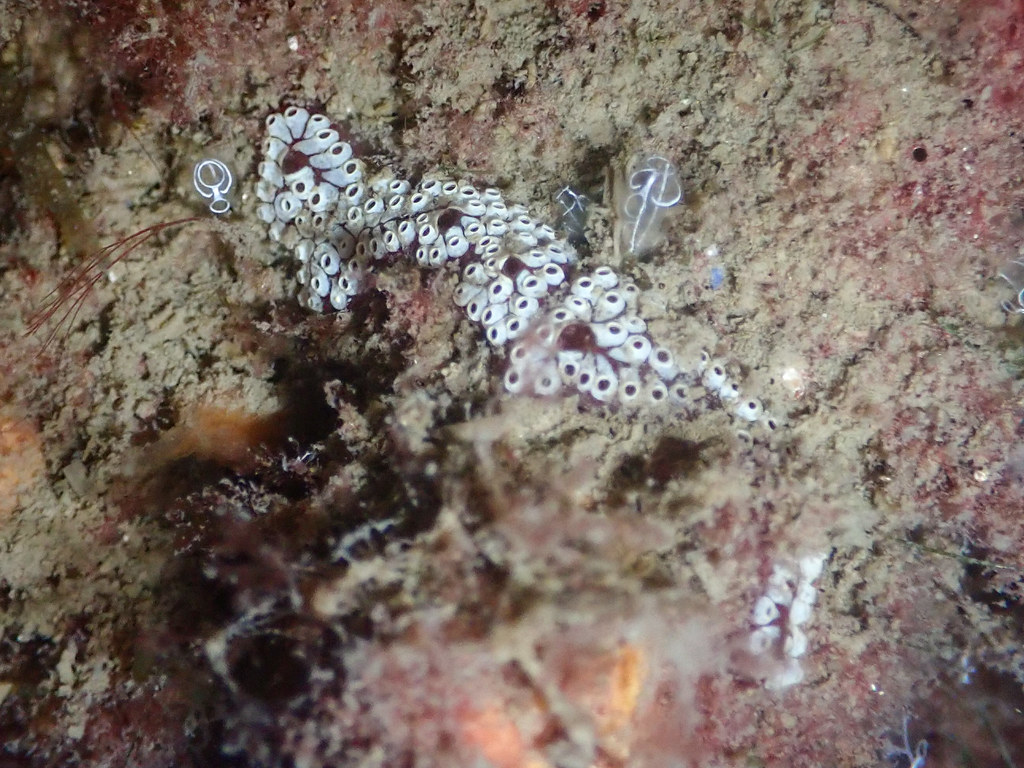
Most of these ascidians are the same old same old. The first four images are of a specimen that looked a bit different. I can only describe it as looking like it is covered in hair or silk. Maybe even a spider web.
A friend pointed out similarities to a species that he had tentatively been calling Botrylloides giganteus. This was partially due to elongated zooids. He used this photo as a reference.

I’ve been feeling out of my league for a while regarding botrylloides and this observation makes me feel even more so. I’ve tried reading the papers. They morphological differences they describe are too difficult for me to understand at this point. I have little confidence in the ones I’ve previously identified.
I’m going to keep photographing species and trying to find patterns. But I am struggling so much with the overwhelm.




Sponges


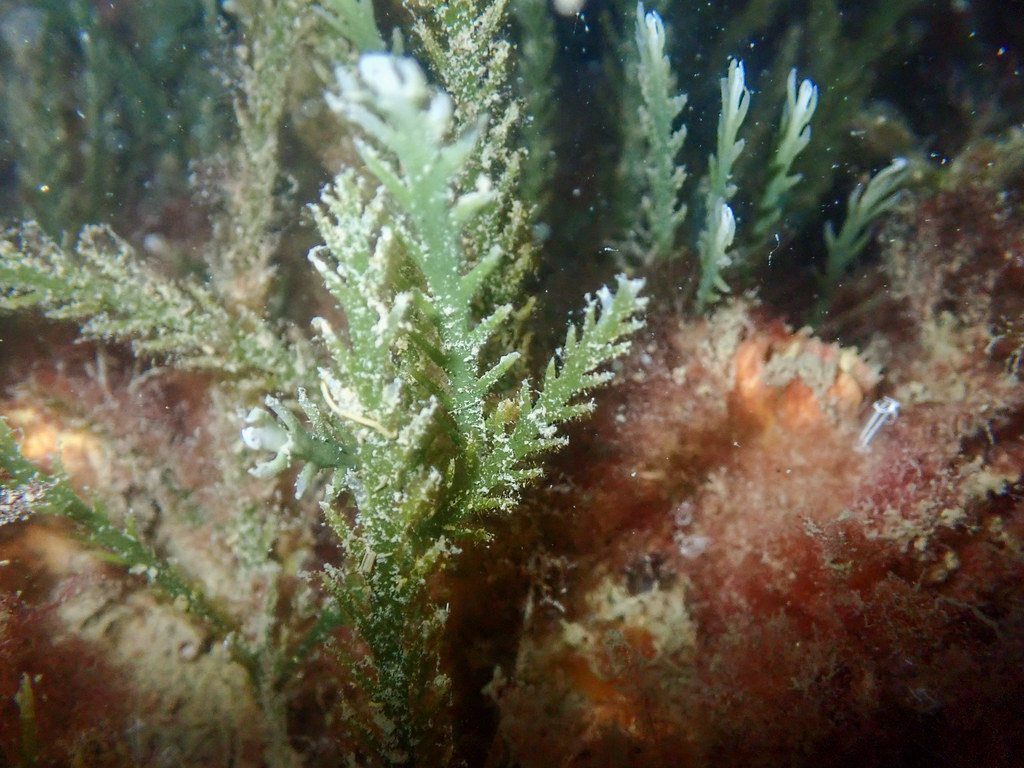
Caulerpa

I’m guessing the species here.
I found a similar looking one at Clifton Springs recently. A peer said that that one was likely to be one of the 2-rowed native Caulerpa series. These are Caulerpa alternans or Caulerpa remotifolia. This was because those little side branches, aka ramuli, are alternating. If they were side by side then it could have been Caulerpa taxifolia.
I’m not sure how to tell if something is Caulerpa in the first place, but that pattern is something I’ll keep an eye out for.
Fish


Other

The above reminds me of the Erythropodium hicksoni that has been peeling off St Helens boat ramp.

The above almost looks like there is a nudibranch. Dagnabbit.