I recently shared how some members of the marine research group came down to Geelong to check out the ascidians. I caught up with two people who have nicknamed themselves ‘Team Ascidian.’ They have welcomed me as part of that group 🙂
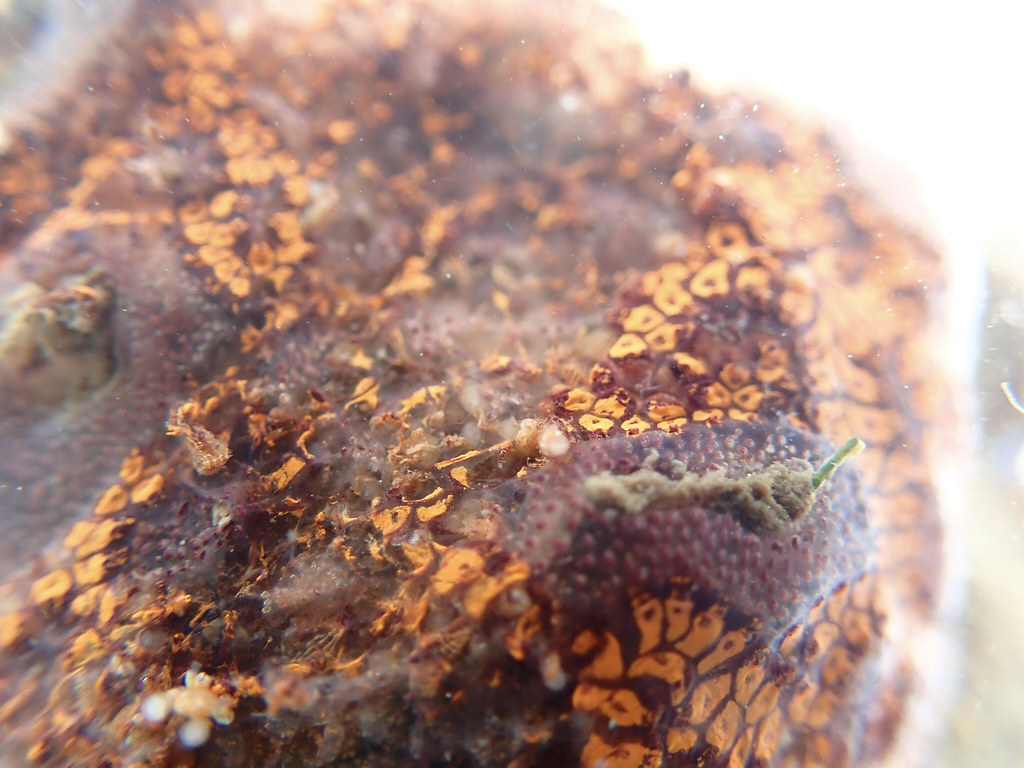
Despite the spreading Erythropodium hicksoni, I was able to find a number of different types of Botrylloides. When you visit an area so darn much, you develop a knack for knowing where they hide. This is one of the specimens we collected.

I call this species Botrylloides Leachii as this type has two openings in the zooid. Team Ascidian emphasized the importance of looking beyond surface characteristics and the fact that the species is undergoing revision. I’m going to develop a new classification system to help me keep track of patterns.
To help with this process, we collected a sample. I say ‘we’, but in reality I sat there not doing much – or was looking in the water. It was one of those situations where I didn’t want to attempt to collect and damage the specimen. Team Ascidian got multiple samples of each type we found for different types of analysis. One of these will be MRNA.
To get those samples, the ascidian was taken out of the water. This mean some of the zooids started to disintegrate or fall off. I’ve likely misunderstood the exact process. These photos do show that some seem to shrivel and almost detach.
I didn’t try to get too many photos of this. I would love to collect a sample for myself and photograph this process in greater detail.