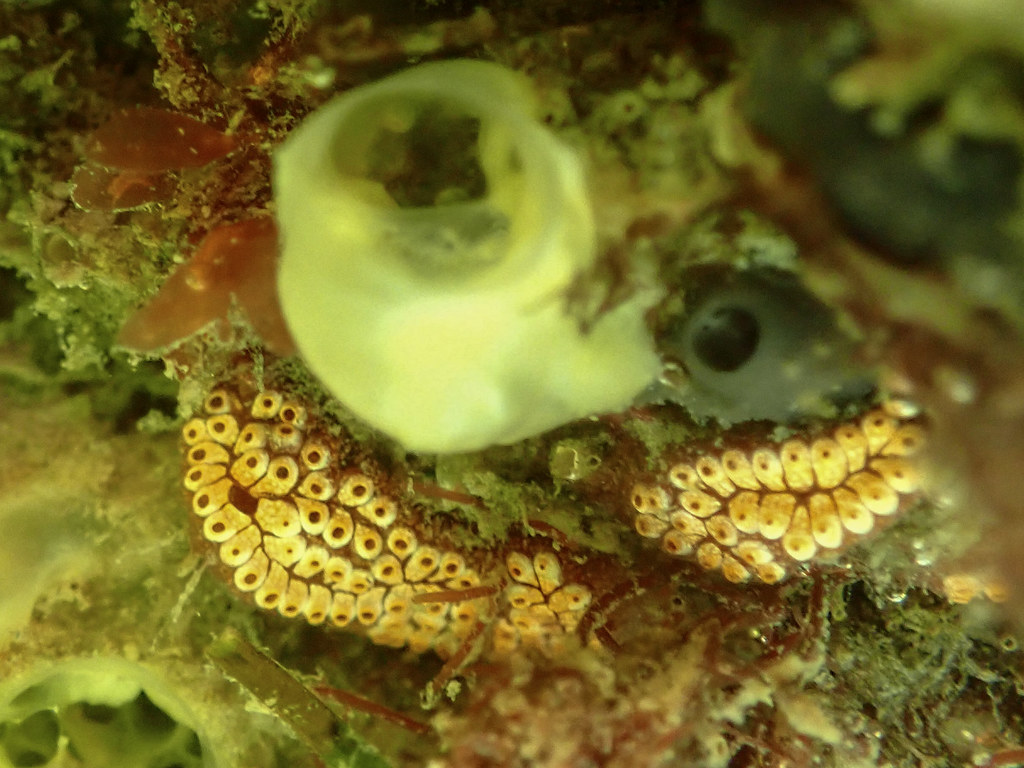
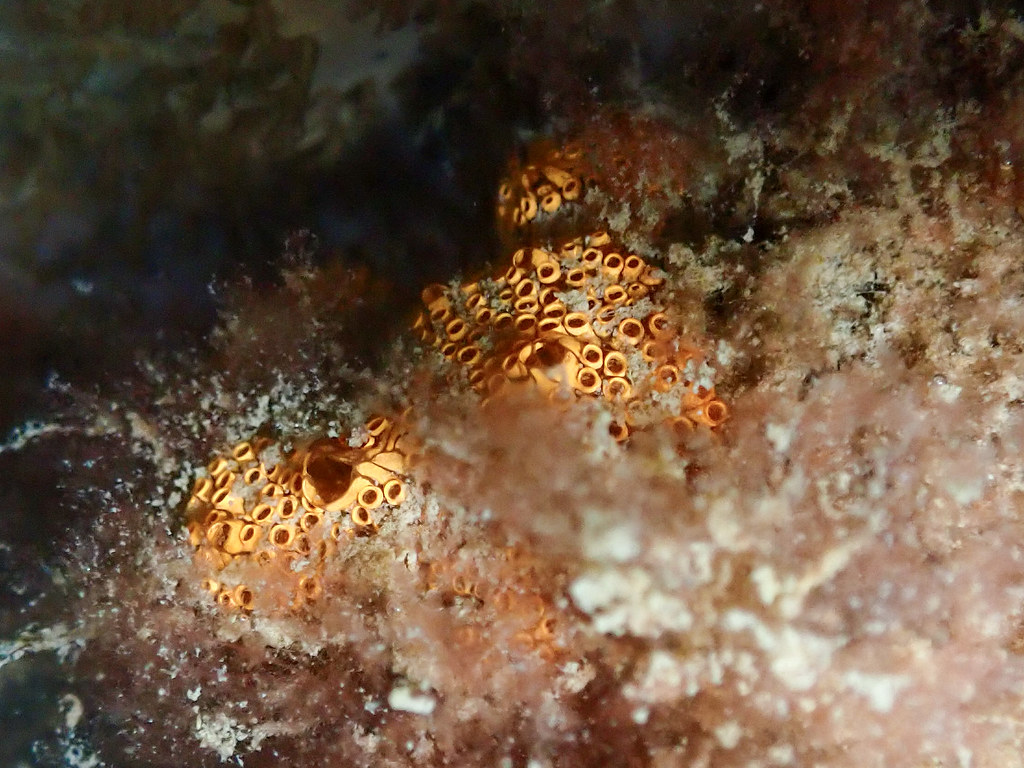
These are the final set of shots from my recent trip to St Helens. There was a lot of diversity in with the botrylloides I found here. Unfortunately there isn’t much accessible information about ascidians different life stages, so I’m not sure whether any of these images are unusual.
I’m in need of a new system to organize my observations. I don’t know how to explain the differences other than holes in the zooid and colour of zooid/rest of ascidian. Maybe what it is growing on? You can see rows when looking in the larger holes on some of them.

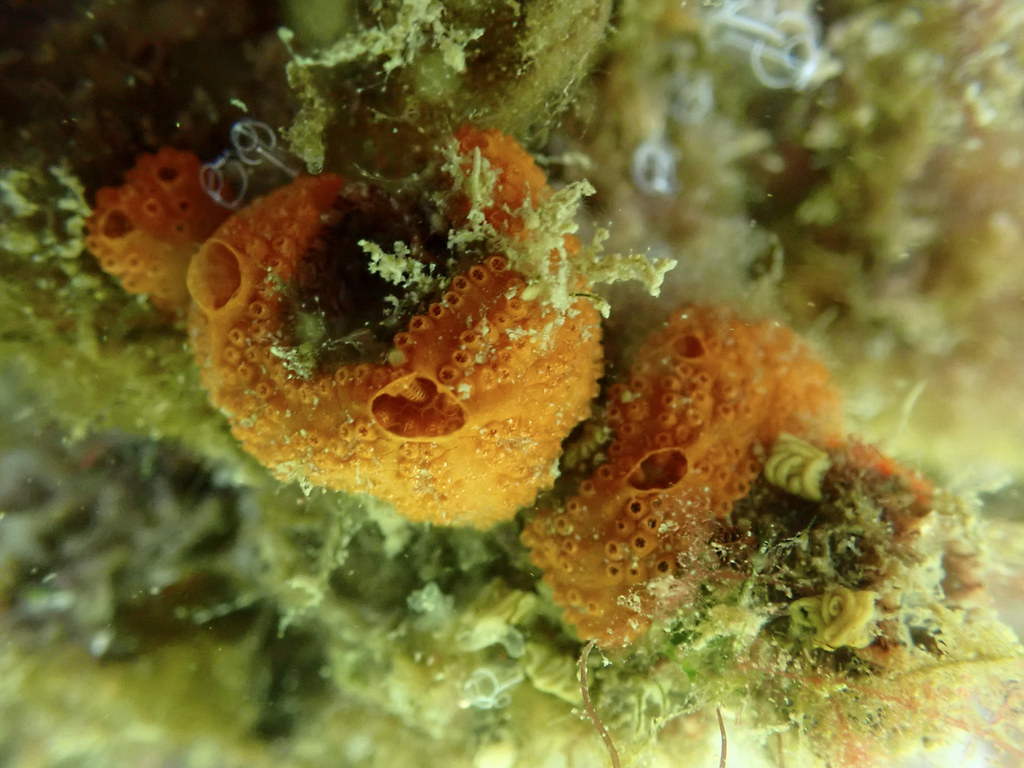

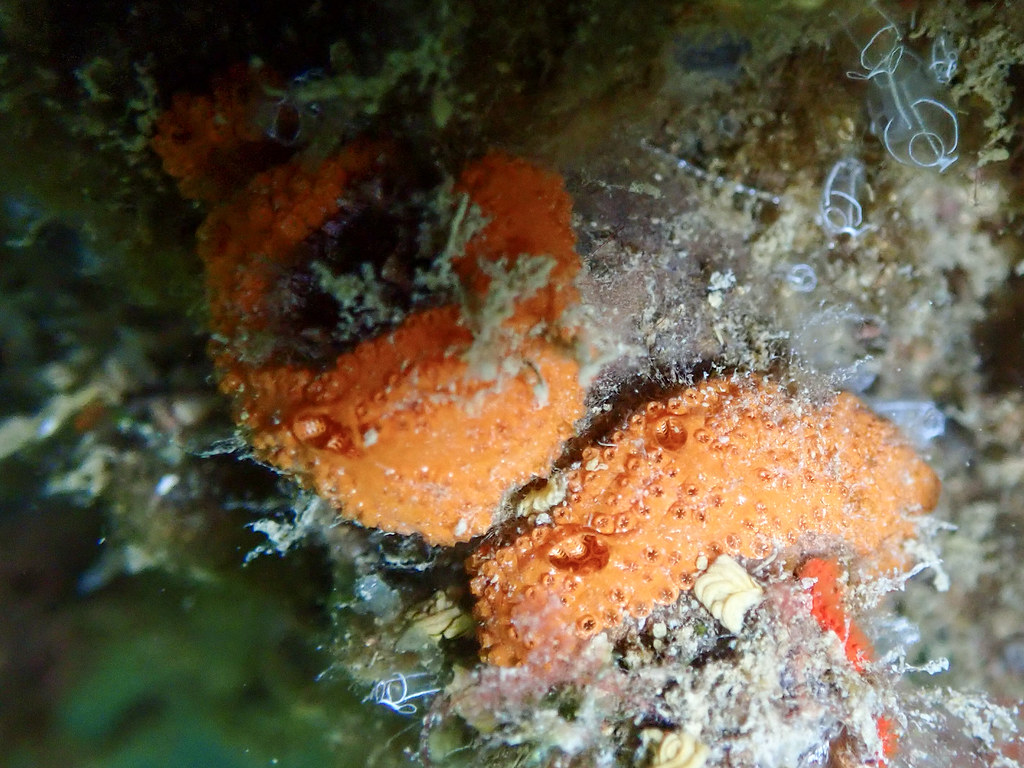

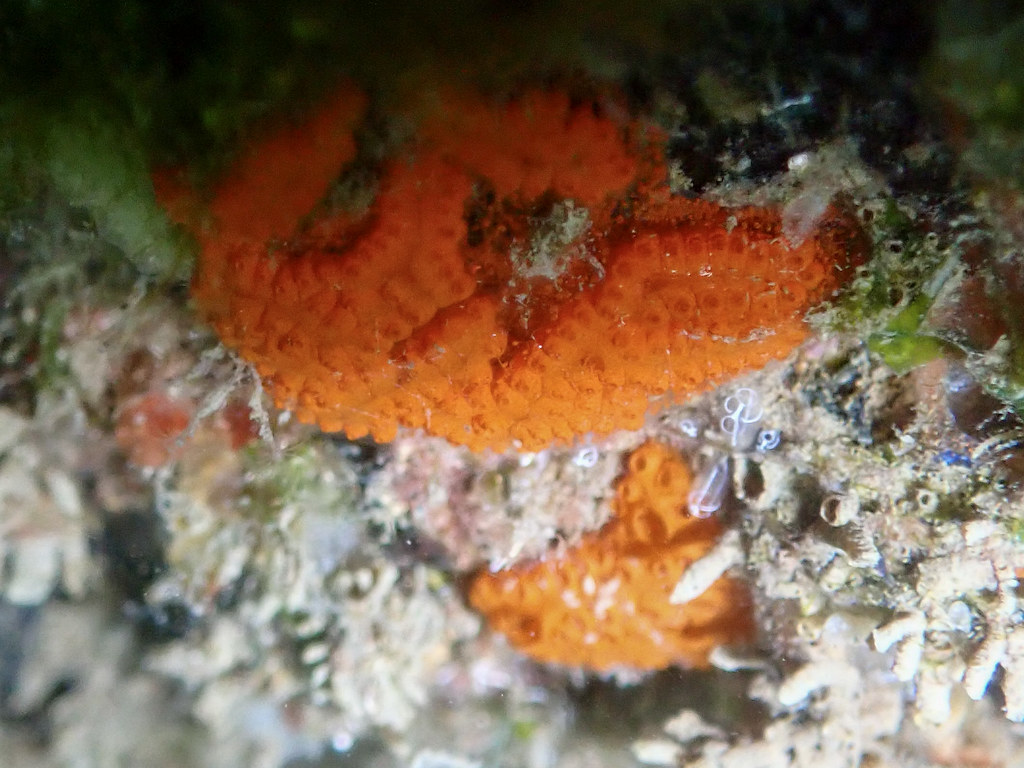
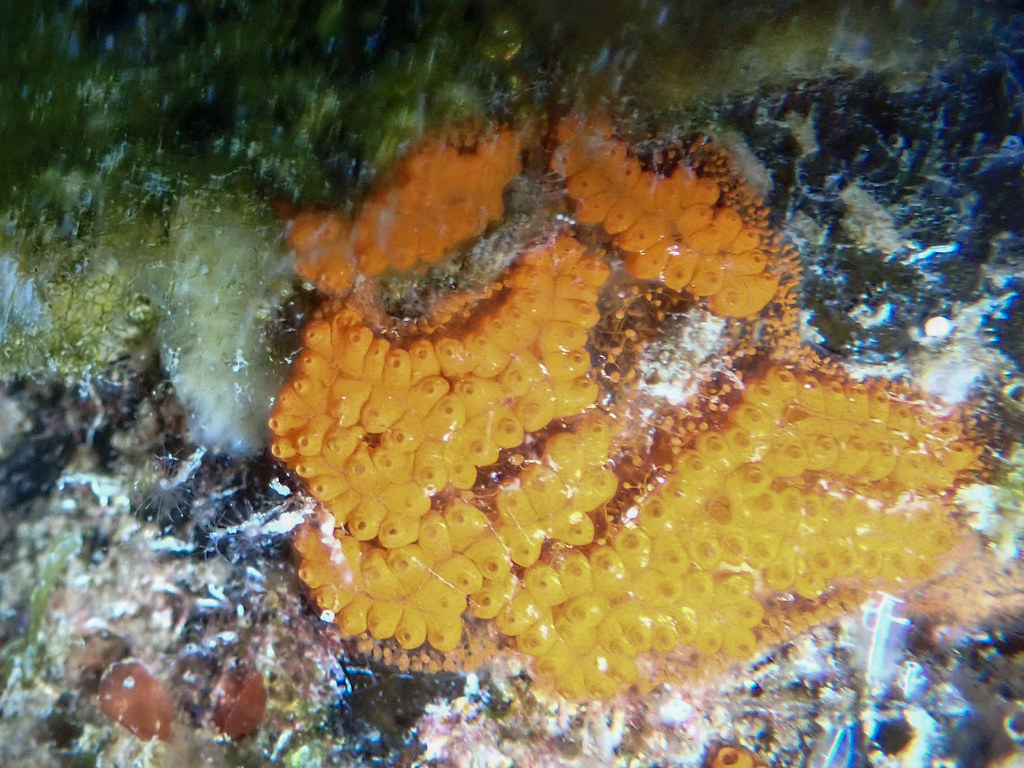
These ones look structurally different from all the others. I don’t know if it is a growth form or something completely different. I’m wondering if this is what eventually become Botrylloides violaceus. Thought my photos of B. violaceus don’t seem to match the ones online.


Not sure if the zooids on the above are white or orange. I’m guessing white. Which is interesting, as normally the zooids with two wholes are orange with purple background.


The colouring on these ones were particularly interesting. I don’t know if the white is part of the ascidian, or whether something external is changing its colour. Structurally it looks like Botrylloides violaceus.


The above one is interesting as the zooids are white. Could it be what becomes B. diegensis?